

Avoiding Strangers & Dangerous Situations Online
%20(1).jpg)
What Parents Need to Know Before a Stranger Reaches Their Child Online
- The most dangerous conversations don’t start dangerous, they start friendly, relatable, and easy to trust, and this helps you spot that shift early
- Hearing real teen perspectives helps your child recognize red flags on their own, not after they’ve already shared something they regret
- Watching the short video together creates a shared understanding, making it easier for your child to come to you instead of hiding something out of fear
- Predators rely on secrecy and confusion, and this gives your family the language and confidence to shut that down quickly
- One small conversation now can prevent manipulation, blackmail, or serious harm later, protecting your child’s safety, confidence, and future
Teens Give Their Red Flags for Strangers Online
Win prizes! After watching this video, click here to share quick feedback.
Teens Talk About How They Stay Safe Online
Win prizes! After watching this video, click here to share quick feedback.
What Can Happen When Teens Trust a Stranger Online
- Exploitation/blackmail (sextortion)
- Emotional manipulation
- Inappropriate content/exposure
- Cyberbullying/harassment
- Scams/stealing
- Invites to meet in person
- Accessibility to drugs
Understanding the Difference Between a Friend and Stranger is Important for Teens to Learn
Win prizes! After watching this video, click here to share quick feedback.
Understanding How Predators Build Trust Can Help You Intervene Earlier
1. Predators impersonate someone else (they lie about who they are online)
- Use fake profiles, often posing as another child, teen, or someone trustworthy
- Steal photos from real users to make their profile look legitimate
- Claim to have mutual friends or shared interests to appear relatable
- May use AI-generated images or deepfake technology to appear real
"I'm [Name] from your school. And we have a lot of friends in common.”
2. They try to build trust (compliments, emotional connections, shared interests)
- Flirt or flatter the child with excessive compliments to make them feel special
- Mirror the child’s interests (e.g., gaming, music, sports) to form a connection
- Use an emotional hook or ask about feelings and personal struggles to position themselves as a confidant
- Make the child feel understood and validated, sometimes better than real-life friends
3. They create secrecy (including privacy and isolation)
- Encourage private conversations away from public forums (e.g., direct messages, encrypted apps)
- Tell the child, "No one else will understand us," or "This is just between us"
- Introduce the idea that parents and other adults "wouldn’t get it" or might overreact
- Gradually discourage talking to others about their conversations
"Let's keep this conversation just between us. Go create a new username or account on _____ app so we can chat there (or send me your cell number)."
4. They build a deeper connection (emotional manipulation)
- Act as a mentor, protector, or "best friend" to the child
- Share personal stories (often fake) to build emotional attachment
- Offer gifts, gaming credits, or financial support to gain favor
- Create a dependency where the child feels the need to check in with them
5. They phish for personal information (gathering personal details)
- Ask innocent-sounding questions about where your child lives, what school they attend, or their routines
- Slowly gather small details over time to piece together real-life information
- Encourage the child to share photos or videos under harmless pretenses
- May ask for a secret phone number or alternative way to communicate outside the app
6. They flip to get what they want (manipulation, threats, blackmail, exploitation)
- Begin requesting explicit photos, videos, or personal favors
- Use emotional pressure ("If you really cared about me, you'd do this.")
- Threaten to expose private conversations, photos, or past mistakes if the child resists
- Push for an in-person meeting or they escalate to coercion and blackmail
7. They use shame to keep control (trap your child in fear)
- Make the child feel guilty for what they’ve shared or done
- Tell them they will be in serious trouble if their parents find out
- Insist that no one will believe them or that they will be judged
- Keep them trapped in fear, ensuring silence while continuing to manipulate them
- They ask for the child to pay them money to make the threats stop
Video Games, New Friends, & Emotional Hooks: Online Predators' Tactics
Win prizes! After watching this video, click here to share quick feedback.
What Predators Say to Kids Online
- “Let’s turn on Vanishing Mode” - content and conversations between the child and the predator will disappear so parents can't see it
- "Set up another Instagram account and chat with me there" - parents won't have that login information
- "You're so pretty, I understand you, your parents don't get you" - predators will build trust with a child and try to alienate them from thier family and friends
- "Your parents wouldn't understand, don't tell them we talked" - predators will encourage the child to hide the relationship
- "How old are you? Where are you? What school do you go to?" - will collect personal iformation to use in the future
- "Here's a photo of me, now send one of you" - predators may push teens to send inappropriate pictures to use as blackmail
- "Send money or I will send this photo to all of your friends and family" - harassing, blackmailing, and threatening a student, causing extreme stress and humiliation
In the News
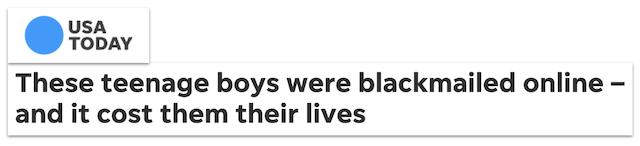
Sextortion has been connected to at least 30 deaths of teen boys by suicide since 2021...In more than a dozen interviews, male sextortion victims and the parents of teenage boys who died by suicide described how predators established a false sense of trust before blackmailing their victims. - USA Today
Your Child Needs Simple, Clear Safety Habits They Can Actually Use
- Guard Your Privacy: Your personal information is yours; keep it that way
- Friend Requests Matter: Know who's adding you; not all connections are real
- Screenshots for Safety: Snap proof if someone's crossing boundaries; share with a trusted adult
- Unadd or Block and Report: Don't hold back; use 'block' and 'report' when needed
- Spot Red Flags: Trust your instincts; and stay skeptical online of anything that seems too good to be true
Staying Involved in Your Child’s Digital Life Makes Them Safer
- Become more digitally savvy - learn about the ways teens are using their phones and other technology
- Understand the apps your child is on - research the apps your child is using or wants to use to understand how they work and what types of dangers may exist
- Have an online agreement - create a Family Media Agreement with teens to set boundaries and expectations surrounding technology use
- Educate your child of the dangers
- Have meaningful conversations - use our dialogue starters and keep an ongoing conversation about the way kids are using technology. Not just the dangers but also the fun ways they are using tech
- Use parental controls - use the device or app built in parental controls to help set limits for kids
- Monitor friends and use - pay attention to who kids are chatting with both online and offline
- **Let them know you are there for them** - also talk with kids about identifying 3 other trusted adults they can talk to who are not their parents
Conversations Can Change How Your Child Responds in a Real Life Moment
- “Have you ever gotten a message from someone you don’t know online? How did you handle it?”
- “If someone online says they are your age and likes all the same things as you, do you think that always means they’re telling the truth?”
- “What is the difference between an online friend vs a real-life friend?”
- “If someone online asked you to keep a conversation secret from me, what do you think their reason might be?”
- “Have you or a friend ever encountered someone online who made you feel uncomfortable or unsafe? If so, what did you or they do?”
- “What would you do if someone online started asking you personal questions, like what school you go to or if you’re home alone?”
- “Is there another adult you could go to and talk with if for any reason if you didn’t feel comfortable coming to me?”
AI Chatbots Can Quietly Influence Your Child’s Thoughts and Emotions
Win prizes! After watching this video, click here to share quick feedback.
Dangerous social media challenges
Dangerous social media challenges may seem fun or harmless for students, but many can be dangerous–encouraging risky behavior, peer pressure, legal issues and even life-threatening actions. Read Social Media Challenges: What Students, Parents & Educators Need to Know for more information.
A few popular challenges include:
Teens Can Easily Find Drugs Using Social Media
- Fentanyl is a potent synthetic opioid drug used for pain relief by doctors but it is only safe when used under a doctor’s care
- Fentanyl is 50 times more potent than heroin
- People who create fake pills sometimes use fentanyl as a filler which are often sold on Snapchat and other apps
- It takes very little fentanyl to produce a “high” so drug dealers can use less of the other drugs in their pills, making it cheaper to produce
- Six out of every ten pills with fentanyl contain a potentially lethal dose (Source: DEA.gov)
- That means that any pill that doesn’t come directly from a pharmacy could kill you

Can you tell fake pills apart from real pills?
- Fake pills often contain fentanyl and it’s impossible to spot the differences between deadly fake pills and real pills
- The drug dealers can make the fake pills look exactly like real pills
How deadly is fentanyl?

- A minuscule amount of fentanyl - merely 2 milligrams, which is roughly equivalent to a few grains of salt - could potentially be lethal
- Many students think they can just break a pill in half, but fake pills may not be mixed evenly, so one fraction of a pill could be deadly
- Look at this image of the penny. That is a lethal dose of fentanyl
What drug dealers don’t want you to know
- Only an adult can get real medication from a real pharmacist or doctor at a pharmacy or doctor's office
- Most sellers can’t guarantee that the pills are fentanyl free
- They may claim that their pills are “clean” but that is often a lie
- It’s illegal to buy any pills without a prescription from a real doctor
- It’s also illegal to possess any pills that aren’t prescribed to you with your name on the bottle
- Every state is different: In California, here’s the law:
- Unlawful possession of prescription drugs falls under “unlawful possession of a controlled substance” in California law, which is a misdemeanor punishable by up to a year in county jail and a fine of up to $1,000
Protecting students from drugs online

- Even if you are getting drugs from a close friend they may not know where those drugs came from
- Percocet, Oxycodone, Xanax, and Adderall are commonly sold online, often using emojis or coded names
- Any of these drugs can be fake pills and contain fentanyl
- Social media is often used to advertise and sell drugs
- If you have a smartphone and/or a social media account then a drug trafficker can find you
Hear comments and questions from real parents and learn expert advice from special guests (Full Event Replay)
Special guests from Orange County Department of Education
Special guests from Buckeye Union High School District & Santa Rosa County District Schools
Still struggling? Here are more resources parents find helpful
- Drugs on Social Media: What Parents & Educators Need to Look Out For
- What is the Chroming Challenge: Understanding the Perils of Inhaling Toxic Chemicals
- TikTok Tranquilizer Challenge: What Parents & Educators Need to Know
- What Parents Need to Know About Vaping
Conclusion
The risks of teens talking to strangers online are real, but with the right knowledge and guidance, families can take steps to stay safe. By understanding how predators operate, recognizing red flags, and fostering open discussions at home, parents can empower their children to make smart choices online. Encourage your teen to think critically about who they interact with, trust their instincts, and reach out for help if something feels off. The internet isn’t going away—but with awareness and clear communication, we can help protect our kids from its hidden dangers.
You're not logged in!
Log in or join to protect your family and enter for a chance to win cool prizes
Become a member or log in to learn more on this topic

This is great info, thanks for giving me some ideas on how to start a dialogue with my teen!

Sharon M.
Parent VIP Member
Josh's presentation about social media was unbelievably fantastic. Our students learned so much about what kids should and shouldn't be doing. The fact that it is such a thoughtful process made it all worthwhile.
Director of College Advising
Educator Webinar Attendee
This webinar is a very helpful eye-opener on the apps that are popular with my students.
Irene C.
Educator Webinar Attendee
You're not logged in!
Log in or join to protect your family and enter for a chance to win cool prizes

., start learning from this page to enter for a chance to win each week!*
Hello, I'm Josh, the founder of SmartSocial.com.
Don't leave this page until you fill out our feedback form that will appear after you learn from the resources...


%20(1).png)
.jpg)